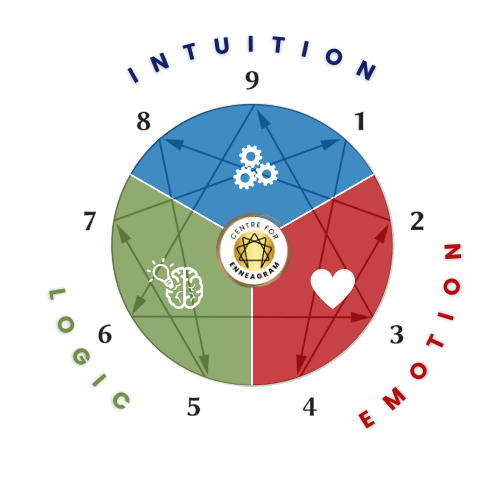
The Enneagram is a powerful tool for self-awareness, emotional intelligence, and personal growth. It reveals the motivations behind our thoughts, feelings, and behaviors, helping individuals and teams improve communication, leadership, and decision-making.
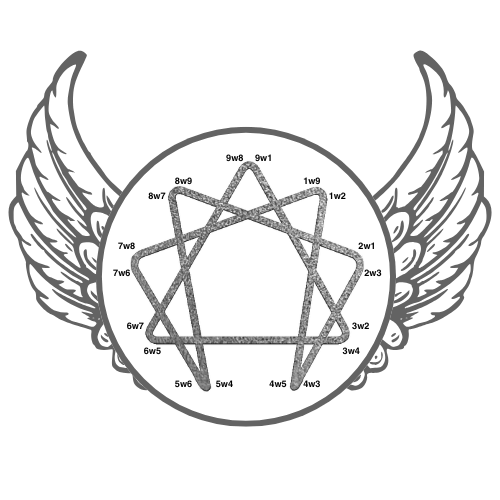
In the Enneagram system, wings refer to the two numbers adjacent to a person’s core type. These wings influence and shape how an individual expresses their dominant type, adding nuances to their personality.
While the core type remains the foundation of an individual’s personality, the wings introduce additional traits, strengths, and challenges. Some people strongly identify with one wing, while others balance both, and a few may not exhibit significant wing influence at all.
Wings do not change a person’s Enneagram type but add complexity to their personality, providing a richer understanding of their behaviors, motivations, and potential growth paths.
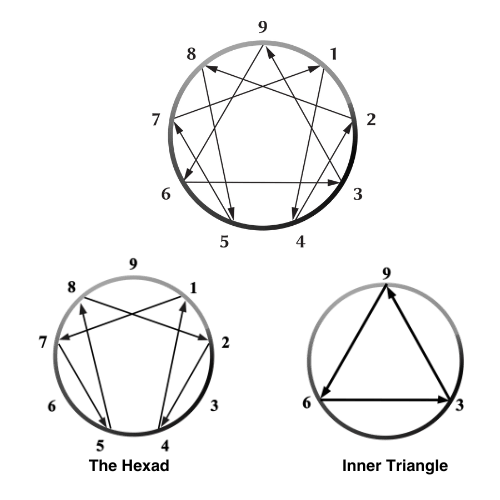
The Enneagram shows how each type shifts—taking on negative traits in stress and positive qualities in security, guided by arrow movements.
Stress Movement – When under pressure, individuals may take on the negative traits of another type. This shift often happens unconsciously, leading to defensive behaviors, unhealthy coping mechanisms, or exaggerated tendencies that move them away from their natural strengths.
Security Movement – In a safe and comfortable environment, individuals can access the positive traits of a different type. This movement supports personal growth, allowing a person to develop qualities that complement their core type, leading to greater balance and resilience.
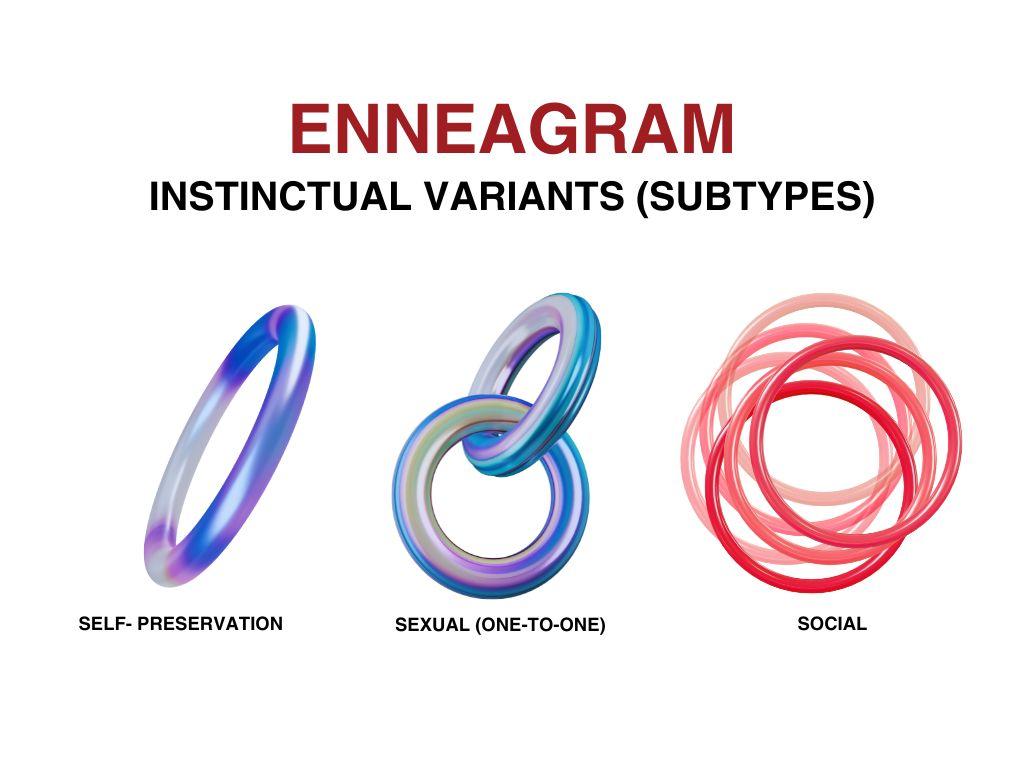
Beyond the core 9 types, the 27 Enneagram subtypes provide deeper insight, shaped by instinctual drives: Self-Preservation (SP) – Focused on security, stability, and well-being Social (SO) – Prioritizes group belonging and social impact
Sexual (SX) – Seeks deep, intense connections and experiences